


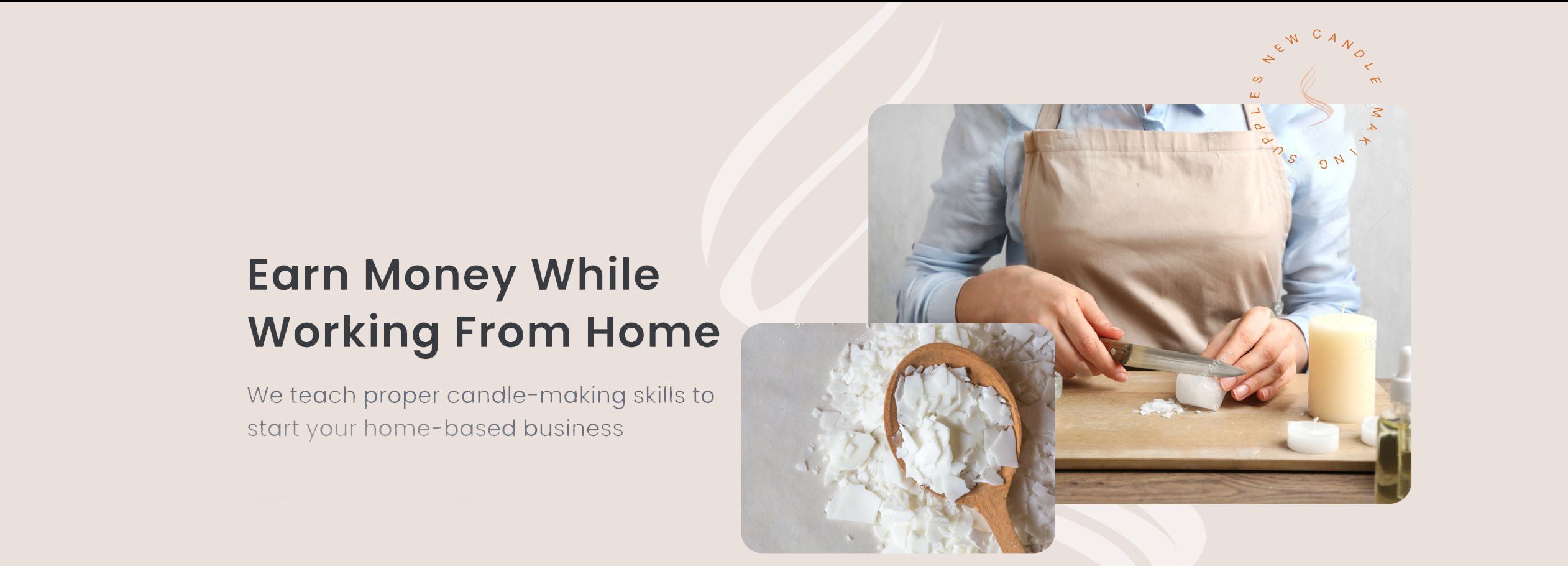
candle making classes
Do you want to start your own business? Become your own boss? Or simply start a new hobby? Find a new way to entertain your kids? Look no further, learn candle making from our team of experts. General Wax & Candle Co. has been in the business for over 70 years, making some the best quality candles in the industry. Browse through our catalog of in-person and digital classes to learn new skills!
Location- 6863 Beck Avenue, North Hollywood, CA 91605
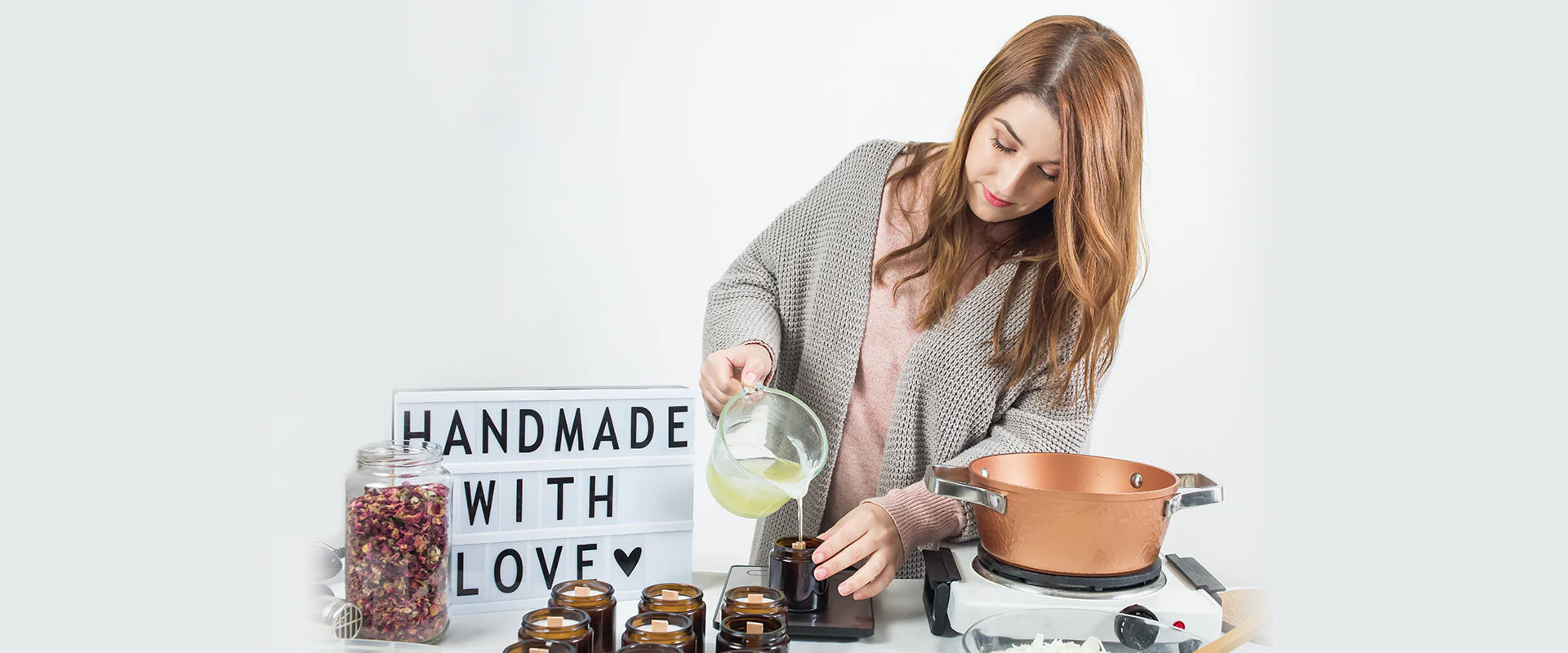
Introduction to Candle Making – Beginner Experience
$29.99
2026 Schedule of Classes
Saturday, June 13 | 9:30 AM – 11:00 AM
Saturday, July 11 | 9:30 AM – 11:00 AM
Saturday, August 1 | 9:30 AM – 11:00 AM
Saturday, September 5 | 9:30 AM – 11:00 AM
Saturday, September 19 | 9:30 AM – 11:00 AM

Discover the art of candle making in this hands-on beginner workshop! In this class, you’ll learn how to transform simple wax into beautiful, fragrant candles that you can take home and enjoy.
You’ll start by learning the essentials: the basic equipment and supplies every candle maker needs, and how to safely and effectively melt your wax. Then, you’ll explore the fun part; you’ll pour your fragrant candles and see your creations come to life.
By the end of the class, you’ll have a solid foundation in candle making, plus your very own candles to take home. No prior experience is necessary, just bring your creativity and enthusiasm!

Intro a la fabricación de velas – Experiencia para principiantes
$29.99
Horario de clases 2026
20 de junio de 2026 | 9:30 AM – 11:00 AM
22 de Agosto de 2026 | 9:30 AM – 11:00 AM
Todo lo básico
El tamaño de la clase es limitado y se llenará rápidamente. Los costos de la clase no son reembolsables y comienzan puntualmente a las 10:00 a.m. a menos que se indique lo contrario. Nuestra clase de fabricación de velas para principiantes cubrirá todos los conceptos básicos. Nuevo en la fabricación de velas, entonces esta clase es el lugar perfecto para comenzar. Te enseñaremos a hacer velas en un ambiente divertido y agradable. Suministraremos todo el material necesario y la parte genial es ir a casa con 3 hermosas velas que usted mismo hizo.
Nuestra instructora experta cubre todos los conceptos básicos, desde la seguridad hasta los materiales necesarios, describiendo las ceras y aditivos para vertir la vela perfecta, por lo que tendrá una buena comprensión al final de la clase. Todos los estudiantes están uno frente al otro para que puedan ver y aprender a ver a otros hacer sus velas también. Saldrá de esta clase sintiéndose empoderado con sus nuevos conocimientos sobre la fabricación de velas y todos los beneficios positivos que puede experimentar al quemar sus nuevas velas hechas a mano. La clase dura aproximadamente 2 horas y obtienes todo esto por $ 29.99 por estudiante.
Nuestro salón de clases está ubicado dentro de nuestra tienda de velas, por lo que después de clase tendrá tiempo para comprar y prepararse para hacer más velas por su cuenta si lo desea. Y para aquellos que quieran iniciar un negocio y aprender más, ofrecemos 2 clases más para mejorar sus habilidades. Estas 2 emocionantes clases profundizan en la ciencia de la fabricación de velas y la resolución de problemas, así como en el marketing y la psicología del color y el aceite de fragancia de velas. Así que únete a nuestra familia de artesanos de velas y conviértete en todo lo que puedas en el maravilloso mundo de la fabricación de velas.
Cada clase esta limitada a 20 estudiantes.
Estamos ofreciendo esta clase por $29.99 por estudiante cuando se inscribe con anticipacion y $39.99 el dia de la clase (si tenemos asientos disponibles)
*La edad minima de cada sesion es de mas de 12 anos y qualquier estudiente menor de 16 anos debe de estar acompanado por un adulto que tambien pago por el curso*

Candle Making Level II – Confidence & Technique Development
$39.99
2026 Schedule of Classes
Saturday, July 11 | 11:30 AM – 1:00 PM
Saturday, September 5 | 11:30 AM – 1:00 PM
Take your candle-making skills to the next level! This advanced, hands-on workshop dives deeper into the art and science of creating candles that not only look beautiful but burn wonderfully and fill the room with fragrance.
In this class, you’ll explore the different types of waxes and additives, learning how each affects your candle’s texture, burn, and scent throw. You’ll also master the secrets of wick selection and placement to achieve a cleaner and more even burn.
Our instruction goes beyond the basics, explaining the science behind what makes a candle perform at its best and covers what resellers need to know about labeling and liability. By the end of the session, you’ll have the knowledge and techniques to craft candles with exceptional fragrance, burn quality, and presentation. Perfect for candle enthusiasts ready to elevate their craft!
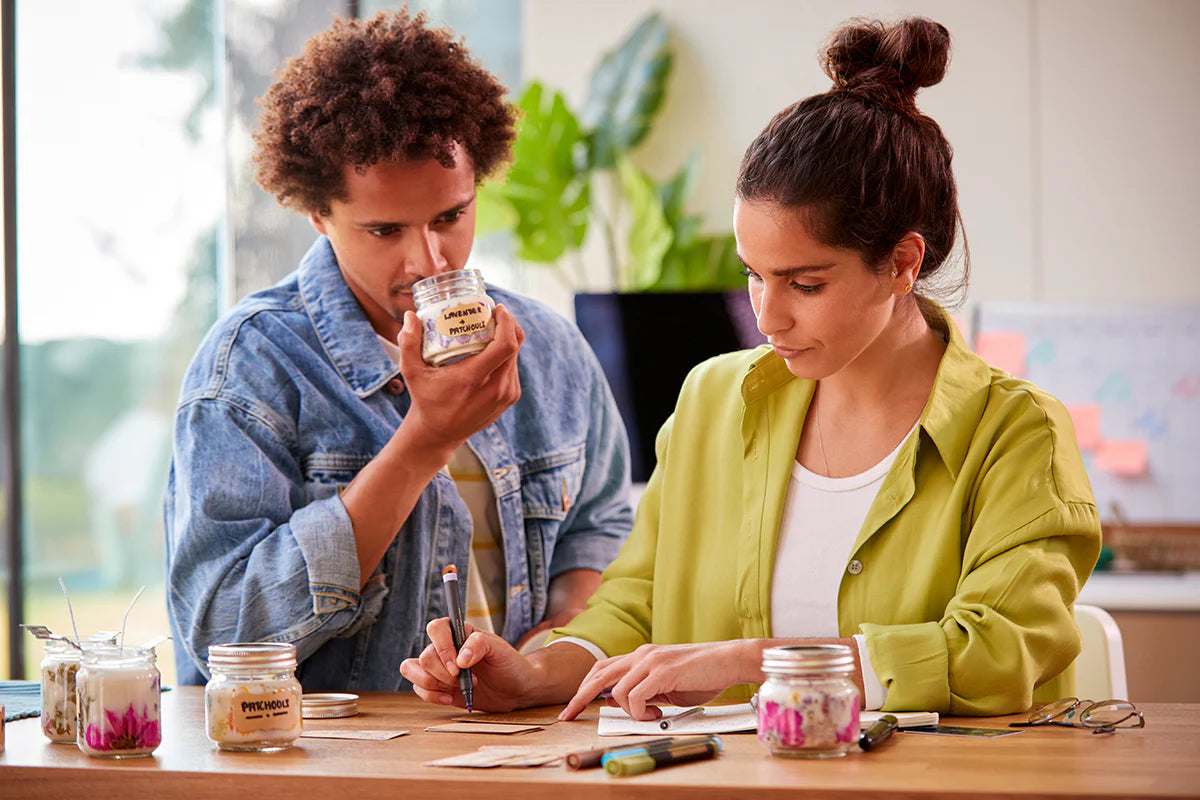
Fabricación de Velas Nivel II – Desarrollo de Confianza y Técnicas
$39.99
2026 Schedule of Classes
20 de junio de 2026 | 11:30 AM – 1:00 PM
22 de Agosto de 2026 | 11:30 AM – 1:00 PM AM
¡Lleva tus habilidades en la fabricación de velas al siguiente nivel! Este taller avanzado y práctico profundiza en el arte y la ciencia de crear velas que no solo se vean hermosas, sino que también se quemen de manera óptima y llenen el espacio con fragancia.
En esta clase, explorarás los diferentes tipos de ceras y aditivos, aprendiendo cómo cada uno afecta la textura, la combustión y la difusión del aroma de tus velas. También dominarás los secretos de la selección y colocación de mechas para lograr una combustión más limpia y uniforme.
Nuestra instrucción va más allá de lo básico, explicando la ciencia detrás de lo que hace que una vela tenga el mejor rendimiento, y cubre lo que los revendedores necesitan saber sobre etiquetado y responsabilidad. Al finalizar la sesión, tendrás el conocimiento y las técnicas necesarias para crear velas con una fragancia excepcional, excelente calidad de combustión y una presentación profesional. ¡Perfecto para entusiastas de las velas que desean perfeccionar su técnica!
Cada clase está limitada a solo 20 estudiantes.
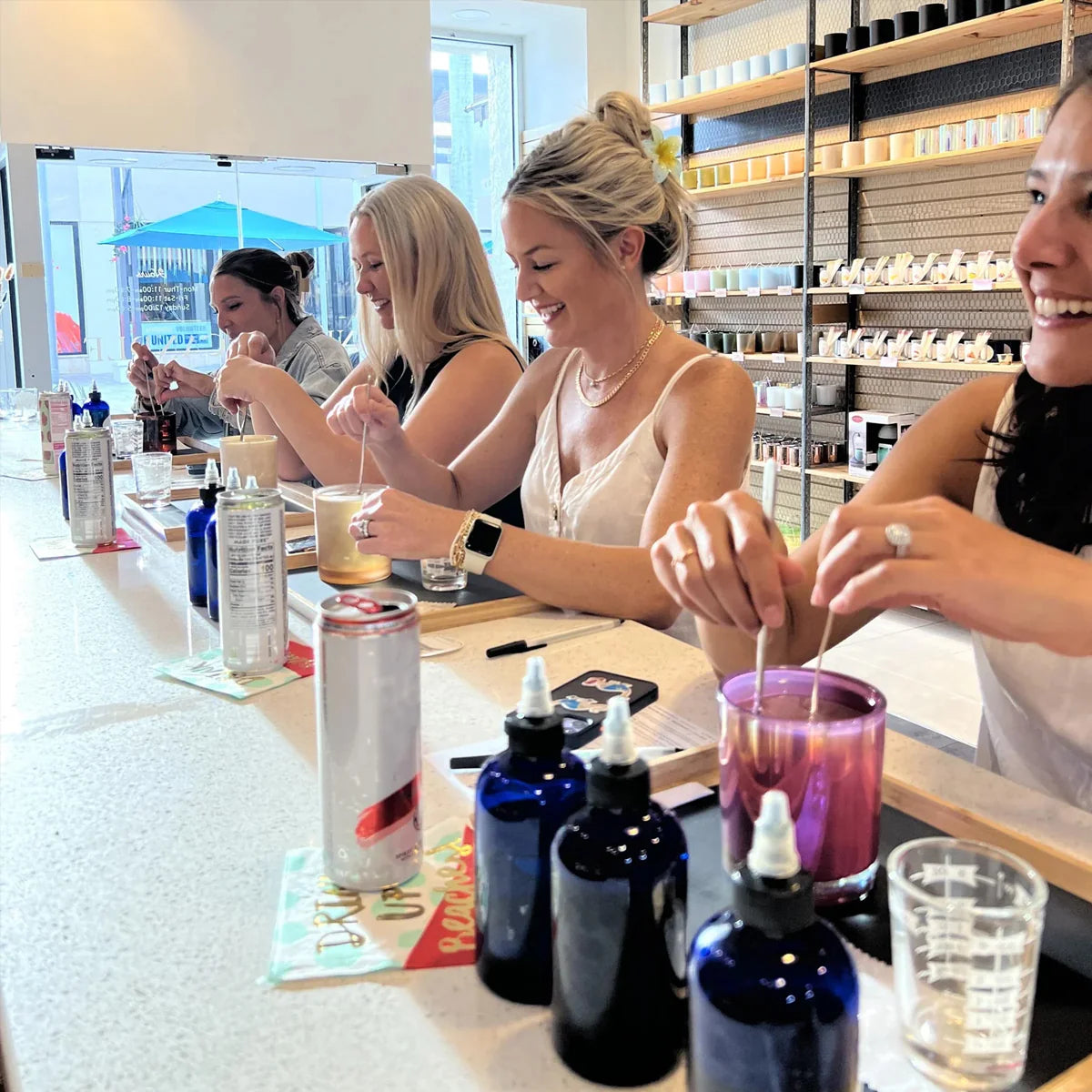
Candle Craft Lab – Advanced Techniques & Creative Studio
$29.99
2026 Schedule of Classes
Saturday, June 13 | 11:30 AM – 1:00 PM
Saturday, July 25 | 11:30 AM – 1:00 PM
Saturday, August 1 | 11:30 AM – 1:00 PM
Saturday, September 19 | 11:30 AM – 1:00 PM
Step into the enchanting world of candle crafting with our Candle Craft Class! Unleash your creativity and learn the art of transforming simple wax into stunning novelty candles and handcrafted candles. This immersive workshop is designed for both beginners and enthusiasts alike, offering a delightful journey into the realm of candle making.
In this hands-on class, our expert instructor will guide you through the entire process, allowing you to craft candles that not only illuminate but also serve as beautiful decorative pieces.
Join us for an unforgettable journey of creativity and self-expression as you immerse yourself in the mesmerizing art of candle crafting. Unwind, connect with fellow crafters, and leave with not just a set of exquisite candles but also newfound skills to continue your candle-making adventures at home. Let the flickering glow of your handmade creations light up your imagination and bring a touch of magic to your surroundings.
*Each session’s minimum age is 12+ and any students under 16 must be accompanied by an adult who has also paid for the course.*
Good to Know
- All classes begin promptly at 10:00 a.m. unless we have indicated otherwise.
- There’s plenty of safe, free parking available for your convenience.
- All classes costs are non-refundable and non-transferable for merchandise credit.